Robinhood Sues Third Parties over Contract Business
Abstract:Robinhood, the trading platform offering commission-free stock and crypto trading, has filed lawsuits against Nevada and New Jersey regulators over mounting threats to its expanding event contract business. The company alleges it faces an “immediate threat of civil penalties and criminal prosecution” in both states, prompting swift legal action to protect its operations.
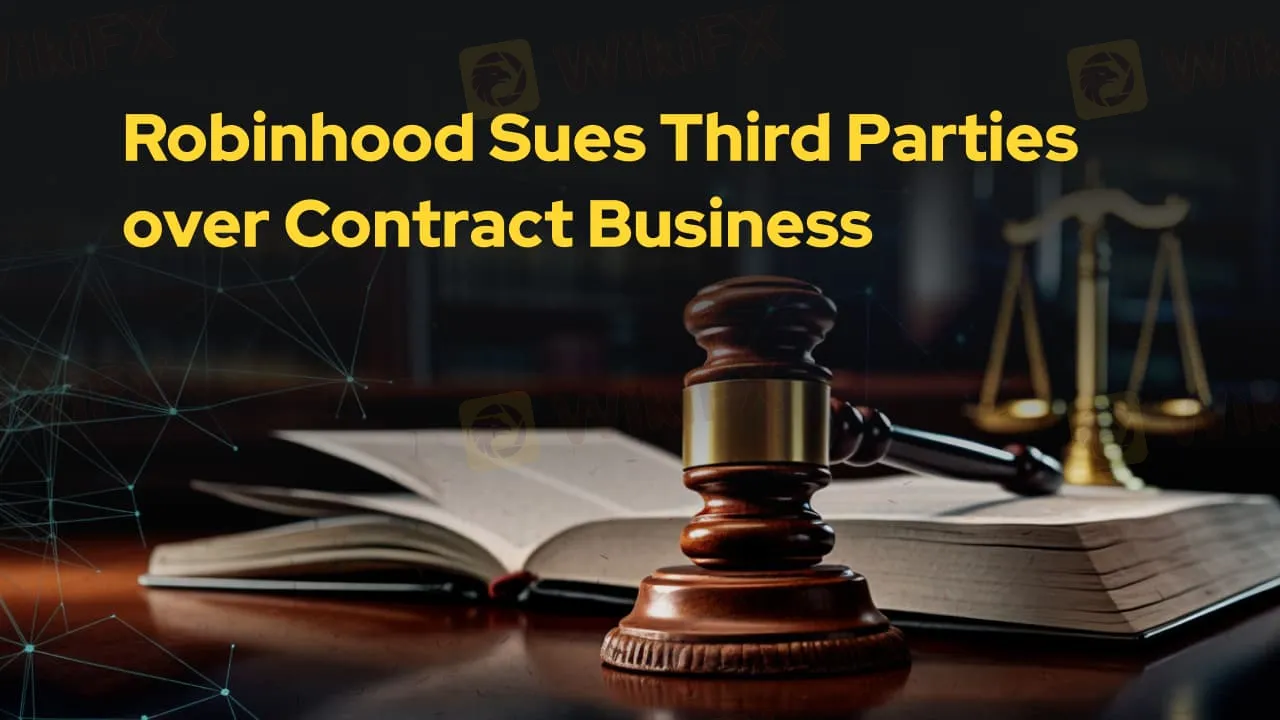
Robinhood, the trading platform offering commission-free stock and crypto trading, has filed lawsuits against Nevada and New Jersey regulators over mounting threats to its expanding event contract business. The company alleges it faces an “immediate threat of civil penalties and criminal prosecution” in both states, prompting swift legal action to protect its operations.
Expanding into Prediction Markets
The lawsuits come at a time when Robinhood is aggressively growing its footprint in event contracts, also known as prediction markets. These contracts allow traders to speculate on the outcome of real-world events, ranging from economic indicators to sports results.
Recently, Robinhood expanded its offerings to include professional and college football, broadening its appeal among traders looking to engage with sports betting-style contracts through a regulated trading platform.
Since the launch of the prediction market business, the company has reported a trading volume of over a billion contracts, highlighting the rapid adoption of the new product line. At the same time, Robinhood has expanded its service scope to include professional football and college football.
Variety of Event-Based Contracts
Beyond sports, Robinhoods prediction markets already cover a wide spectrum of topics,
Cryptocurrencies – allowing speculation on token price thresholds.
Economic Indicators – such as inflation or jobs data releases.
Other Sports – broadening engagement beyond traditional financial markets.
By offering this diversity, Robinhood is positioning itself at the intersection of trading, speculation, and entertainment.
Regulatory Issue
Nevada and New Jersey, both of which have well-established gambling oversight frameworks, appear to be challenging Robinhood‘s event contracts because they may constitute unlicensed gambling activity. Robinhood’s lawsuits argue that its products are legally compliant and fall under the category of trading contracts rather than gambling wagers.
The company claims that without court intervention, it could face penalties that would disrupt its expansion strategy and undermine confidence in its event contract markets.
Robinhoods legal battles underscore the growing tension between innovative trading platforms and state regulators as financial products increasingly blur the line between investing and gambling. Prediction markets have gained popularity for their ability to crowdsource sentiment on future events, but they also face legal gray areas, particularly in the U.S.
If successful in its lawsuits, Robinhood could pave the way for broader adoption of prediction markets nationwide. On the other hand, defeat could restrict its ability to expand into lucrative markets like sports and cultural betting, where consumer interest is high.
Conclusion
Robinhoods decision to take Nevada and New Jersey regulators to court highlights the high stakes surrounding the future of event contracts in the United States. With billions of contracts already traded and strong demand from retail users, the company is betting that legal clarity will solidify its position as a leader in this fast-evolving sector.


Read more
Plus500 Review: Do Traders Face Issues Concerning Withdrawals and the Trading Platform?
Failed to withdraw funds from the Plus500 platform? Does the Israel-based forex broker give many excuses to deny withdrawals, such as imposing the minimum withdrawal amount restriction? Does the broker’s app fail constantly during the trading hours? These allegations have reportedly taken vicious shape on broker review platforms such as WikiFX. In this Plus500 review article, we have examined these allegations. Let’s begin!

Good News for Rupee Derivative Traders as RBI Lifts Curbs on Banks
In what would lift the mood of rupee derivative traders, the Reserve Bank of India (RBI) partially lifted some restrictions on rupee derivative trades imposed by the regulator on April 1, 2026. On this day, the central bank prevented banks from issuing non-deliverable forwards to clients and barred companies from reassessing forward contracts as part of its strategy to counter arbitrage trades, which caused fluctuations in the rupee’s exchange rate. The central bank further prevented banks from signing FX derivative contracts involving the rupee with their associated parties. Read on!

Exclusive Interview WikiFX April: Trader Becomes Victim of Alleged Forex Broker SixFX
Overview: A comprehensive investigation into the alleged scam case involving forex broker SixFX (Six Global Markets Ltd) in Indonesia. Explore an exclusive interview with an Indonesian victim, WikiFX’s review, and the latest user complaint evidence from 2026.
DUHANI Legitimacy Check: Is This a Fake Broker or a Legitimate Trading Partner?
When traders search for "Is DUHANI legit?" They are asking a more basic question: Is my capital safe with this broker? After carefully studying its regulatory status, business claims and real user feedback, the answer is concerning. DUHANI Capital shows multiple serious warning signs that are typical of a high-risk, unregulated broker. The purpose of this analysis is to provide a protective guide, helping you avoid potential financial harm.
WikiFX Broker
Latest News
'Resumption of hostilities': seized ship, vessel attacks push U.S.-Iran ceasefire toward brink
 WikiFX
Anatomy of Currency Pairs: Why New Traders Start With EUR/USD
WikiFXXTB Fined PLN 20 Million by Polish Regulator Over CFD-Related Compliance Issues
WikiFXDaman Securities Regulation: Is It Safe or High Risk?
WikiFXPrimeWaveFX Review 2026 – Should You Trade With This Broker?
WikiFXSEB Regulation: Is SEB Licensed or High Risk?
WikiFXPlus500 Review: Do Traders Face Issues Concerning Withdrawals and the Trading Platform?
WikiFXWhy Your Forex Trade Executed at the Wrong Price
WikiFX24markets Regulation: Is 24markets FSC Regulated?
WikiFXdbinvesting Review 2026: Is this Forex Broker Legit or a Scam?
WikiFXRate Calc
