RMB Breaks 7.0: Seasonal Flows and Dollar Weakness Drive Surge

Abstract:The offshore Renminbi (CNH) has surged past the critical 7.0 per Dollar barrier for the first time in 14 months, trading at 6.9977 as of Dec 25. The move marks a significant shift in sentiment, driven by year-end corporate settlement flows and a broadly softer US Dollar.
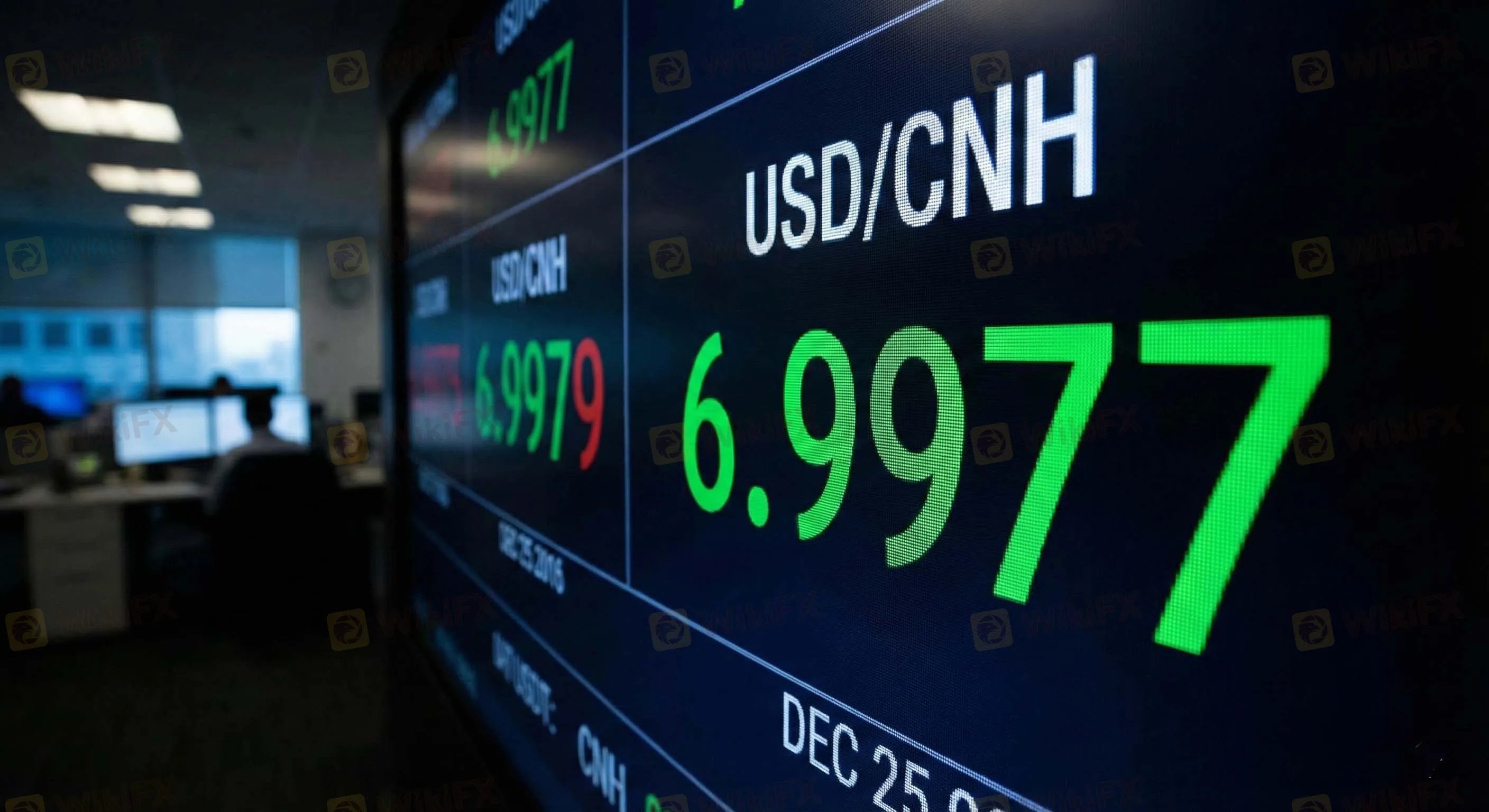
The offshore Renminbi (CNH) has surged past the critical 7.0 per Dollar barrier for the first time in 14 months, trading at 6.9977 as of Dec 25. The move marks a significant shift in sentiment, driven by year-end corporate settlement flows and a broadly softer US Dollar.
The “Settlement Tide”
Market analysis from Shenwan Hongyuan Securities indicates that the appreciation is heavily influenced by the traditional “year-end settlement wave.” Exporters, sitting on accumulated foreign earnings, are converting funds back to RMB for operational needs.
- Correlation: Since December, the correlation between the RMB and the USD index has risen to 0.95, suggesting the move is fundamentally aligned with the Dollar's recent slide below the 99 handle.
- Policy Stance: The People's Bank of China (PBOC) has signaled tolerance for this strength, setting reference rates that track market moves, though analysts warn that rapid appreciation might invite “smoothing” operations to prevent export competitiveness from eroding too quickly.
2026 Outlook
Looking ahead, the divergence between onshore (CNY) and offshore (CNH) rates suggests international capital is betting on further appreciation. However, with the looming threat of tariff uncertainties returning under a potential shift in US trade policy, volatility is expected to remain high. The consensus target for the RMB in 2026 has shifted to a “mild appreciation” bias, potentially stabilizing in the 6.80-7.00 range.
Read more

Spring Rally in Chinese Equities Signals Potential Lift for AUS and NZD
Amidst a gloomy global trade outlook, China's equity markets are flashing green, potentially offering support to the Chinese Yuan (CNY) and its liquid proxies, the Australian Dollar (AUD) and New Zealand Dollar (NZD).

Offshore Yuan Pierces 7.0 as Gold Corrects in Holiday Trade
Thin holiday liquidity amplified moves in global markets this week, with the Chinese Yuan staging a significant rally against the Dollar, while precious metals retreated from record valuations.

China’s Export Resilience: A Structural Pivot Towards the 'Global South'
Despite looming tariff threats and Western protectionism, China’s export engine is defying expectations, posting record highs in trade surplus figures through November. A deep dive into the trade data reveals a massive structural pivot: China is successfully substituting stalling Western demand with aggressive growth in Emerging Markets.

Asia FX Outlook: Japan's Rate Hike "Trust Vote" and the Reality of Yuan Strength
Barriers in Asian currency markets are shifting as Japan embraces monetary normalization and China navigates a complex valuation recovery.
WikiFX Broker
Latest News
Stop Chasing Headlines: The Truth About "News Trading" for Beginners
WikiFXWhy Markets Pump When the News Dumps: The "Bad Is Good" Trap
WikiFXCommon Questions About GLOBAL GOLD & CURRENCY CORPORATION: Safety, Fees, and Risks (2025)
WikiFXYen in Peril: Wall Street Eyes 160 as Structural Outflows Persist
WikiFXIs 9X markets Legit or a Scam? 5 Key Questions Answered (2025)
WikiFXIs CMC Markets Legit or a Scam? Key Questions Answered (2025)
WikiFXBiggest Scams In Malaysia In 2025
WikiFXRMB Breaks 7.0: Seasonal Flows and Dollar Weakness Drive Surge
WikiFXRate Calc

