Libertex Regulation and Licensing: What Traders Must Know
Abstract:Libertex regulation by CySEC ensures EU investor protection and licensed trading across multiple markets.
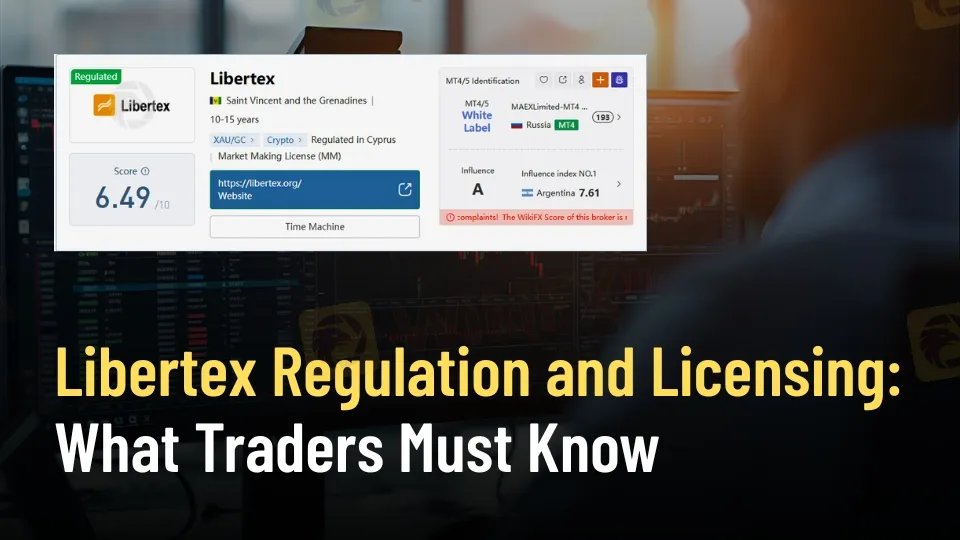
Libertex operates under CySEC oversight through its entity Indication Investments Ltd, providing a layer of EU regulatory protection for traders. This setup allows access to licensed trading in forex, CFDs, and other assets, though complaints highlight execution risks.
Libertex CySEC Regulation Details
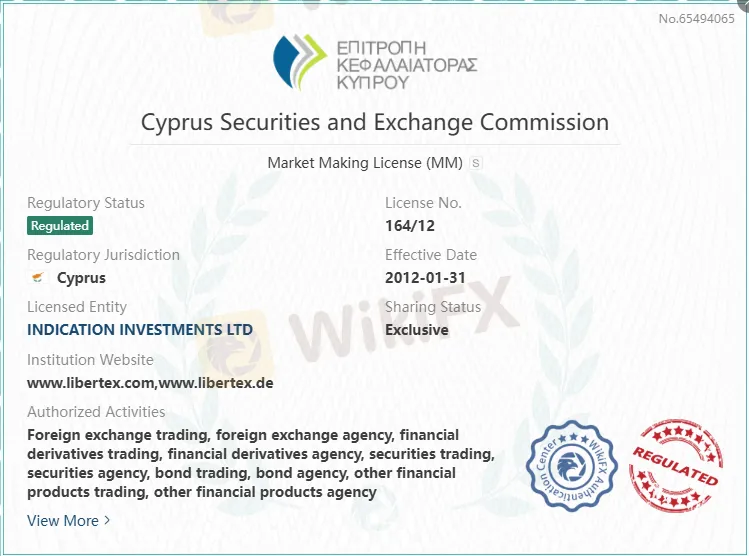
Cyprus Securities and Exchange Commission (CySEC) regulates Libertex via Indication Investments Ltd, holding a Market Maker (MM) license numbered 164/12. The licensed entity lists its address at 116 Gladstonos Street, Michael Kyprianou building, with contact via support@help.libertex.com and phone 357 22 025 100. A 2020 physical verification confirmed an office at the Cyprus regulatory address, bolstering claims of operational transparency.
This Libertex regulation aligns with EU standards, mandating client fund segregation and compensation via the Investor Compensation Fund up to €20,000 per client in case of broker insolvency. Documents like Annex 1, Annex 2, and Annex 3 verify the license, active since around 2012. Traders in restricted zones—Russia, USA, Japan, Brazil, and high-risk FATF jurisdictions—face exclusions.
Company Background and Domain Facts
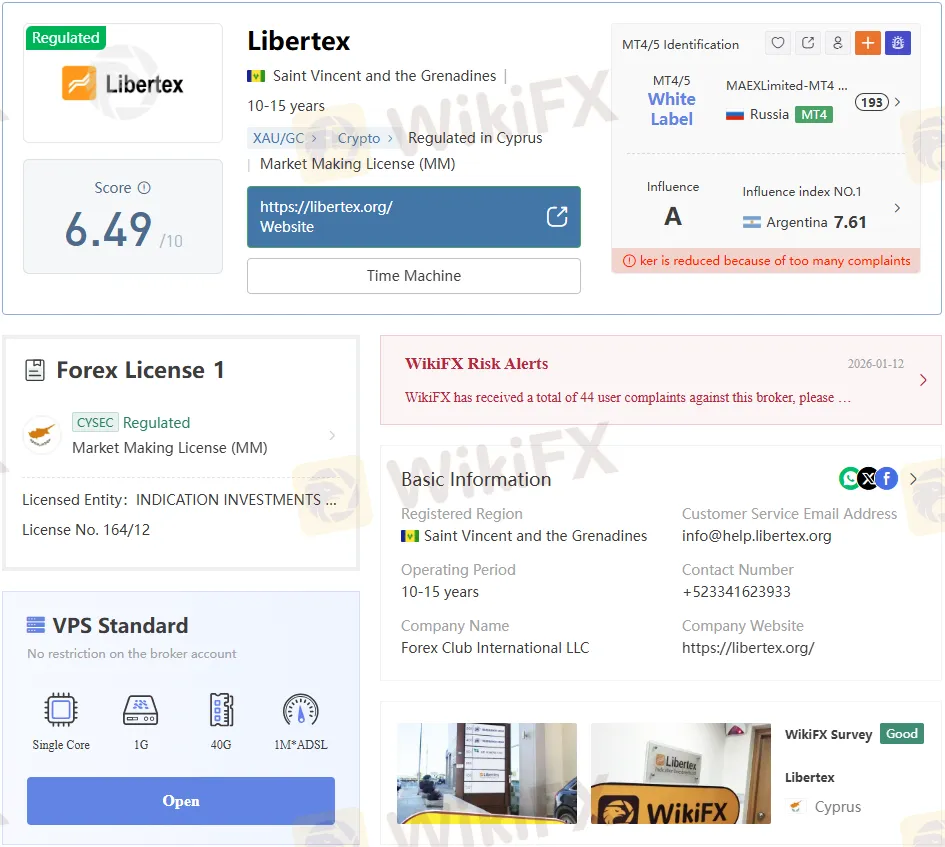
Libertex traces to Forex Club International LLC, founded in 2016, with primary registration in Saint Vincent and the Grenadines for non-EU operations. The domain libertex.org was registered on July 6, 2016, expires July 6, 2025, and was updated on June 10, 2024, under status “client transfer prohibited” with Cloudflare nameservers. Servers operate from Mauritius (LibertexMU-MT4/MT5) with leverage up to 1:1000 and low ping times around 1-2 ms.
WikiFX scores Libertex at 6.49/10, noting its regulated status in Cyprus alongside offshore elements like a Saint Vincent setup. Influence ranks high in Argentina at 7.61, but the “Time Machine” score dips due to complaint volume. No major domain red flags appear, though regional servers suggest tailored global access.
Trading Platforms and Instruments
Libertex supports MT4, MT5, and its proprietary Libertex platform, with white-label MT4/MT5 options across 25 servers—18 MT4, 7 MT5. Average execution speed hits 191.54 ms, rated “perfect” for reliability. Traders access stock CFDs, cryptocurrencies, forex, metals, indices, commodities, ETFs, and bonds, with spreads from 0.0 pips and leverage to 1:1999.
No swap fees, inactivity fees, margin calls, or forced stop losses apply, plus fractional shares from 0.01 and dividend payouts. Demo accounts exist, minimum deposit starts at $10 via bank cards or e-wallets. Platforms suit beginners (MT4 web/mobile) to experts (MT5), with real market execution noted.
| Feature | MT4 | MT5 | Libertex Platform |
| Servers | 18 | 7 | White-label integrated |
| Leverage | Up to 1:1000 | Up to 1:1000 | Up to 1:1999 |
| Spreads | From 0.0 pips | From 0.0 pips | From 0.0 pips |
| Execution Speed | 191.54 ms avg | 191.54 ms avg | 191.54 ms avg |
Fees, Deposits, and Withdrawals
Deposits start at $10-$50 equivalent, processed instantly for cards (Visa/Mastercard, 1-2.5% fee), WebMoney (0.8-1.8%, unavailable in Asia), Skrill/Neteller (except EU wallets, ~0.5-1.9%), and Perfect Money (0.5%). Bank transfers take 2-5 days; bank fees apply.
Withdrawals mirror deposits: cards 2 mins to 5 days, banks 2-5 days post-14:00 GMT processing, no minimum stated, but verification may delay. P2P card transfers hit 30 minutes typically. No trade, swap, or inactivity fees enhance cost appeal.
Pros and Cons of Libertex Regulation
Pros:
- CySEC license (164/12) offers EU protections like segregated funds and ICF coverage.
- Low barriers: $10 min deposit, 0.0 pips spreads, high leverage 1:1999.
- Verified Cyprus office and fast execution (191 ms).
- Diverse instruments (crypto to bonds) on mature MT4/MT5 platforms.
Cons:
- Offshore registration in Saint Vincent raises leverage/access flags for some.
- Withdrawal delays are reported, tied to verification or banks.
- Regional bans limit global reach (e.g., USA, Russia).
- WikiFX score 6.49 reflects the complaint impact.
Reported Trader Complaints Examined
Multiple unverified complaints surface, including withdrawal blocks (“They stole my money, wont let me withdraw” from Colombia), undelivered $200 bonuses, and extortion claims. One trader alleged a Libertex advisor pushed a $10,000 loss via a guided trade, urging loans with recovery promises—unresolved per report. Another from Argentina cited scam calls leading to total savings wipeout, demanding call investigations without response.
These cluster around aggressive sales, bonus issues, and support lags, concentrated in Latin America within the last year. Positive notes exist, like quick $200 withdrawals praised by a Colombian user. High complaint volume trimmed WikiFXs Time Machine score.
Libertex vs Competitor Brokers
Libertexs CySEC tier outshines pure offshore peers like those solely in Saint Vincent, matching EU brokers on protections but exceeding leverage (1:1999 vs typical 1:30-500). Compared to eToro or Plus500 (fellow CySEC), Libertex adds a proprietary platform and crypto depth, but trails in social/copy trading.
| Aspect | Libertex | eToro (CySEC) | Plus500 (CySEC) |
| Regulation | CySEC + SVG | CySEC | CySEC |
| Leverage | 1:1999 | 1:30 (retail) | 1:30 (retail) |
| Min Deposit | $10 | $50-200 | $100 |
| Spreads | 0.0 pips | Variable | Variable |
| Complaints | High volume | Moderate | Low |
Domain maturity (since 2016) rivals competitors, but Mauritius servers echo hybrid models like XM.
Account Types and Support Options
Details on tiered accounts are sparse, but min $10 suits casual traders; leverage scales to pros. Support spans live chat, email (info@help.libertex.org), and region-specific phones (e.g., Mexico +52 33 4162-3933, global +44 7456 417828). Latin America, Vietnam, and Thailand get dedicated lines.
No explicit VIP tiers noted, but loyalty perks cut commissions/swaps. Restrictions bar high-risk nation clients, enforcing AML.
Bottom Line on Libertex Regulation
Libertex regulation by CySEC via Indication Investments Ltd delivers credible EU safeguards amid offshore flexibility, ideal for high-leverage seekers eyeing diverse markets. Traders weigh strong tech (MT4/MT5, 0 pips) against complaint patterns on withdrawals and sales tactics—verify personally via demo. For legitimacy-focused users, physical Cyprus presence and license docs affirm standing, though offshore roots demand caution versus pure Tier-1 brokers.


Read more

Wundersys vs tradgrip: Two Offshore Newcomers Go Head to Head — and Neither Brings Home a Trophy
Some broker comparisons end with a confident "go with this one." This is not one of them — and that honesty is exactly what makes it worth reading. Wundersys and tradgrip are two young, offshore-registered brokers that keep popping up in front of beginner traders, often through aggressive online marketing. Both promise the usual buffet: tight spreads, generous leverage, multiple account tiers. And both, according to WikiFX, sit near the very bottom of the safety scale. So instead of crowning a champion, this comparison is really about something more useful: learning to read the warning signs, understanding the small differences that still matter, and knowing why "the better of two risky options" is still a conversation about risk.
The 6 Lowest-Commission Forex Brokers South Asian Traders Are Flocking To in 2026
If you trade forex from India, Pakistan, Bangladesh, Sri Lanka, or Nepal, you already know the quiet truth that eats into every trader's results: it is not just the market that decides whether you profit — it is the cost of getting in and out of each trade. Shave a couple of dollars off your commission on every lot, multiply it across hundreds of trades a year, and you are looking at the difference between a strategy that works and one that bleeds out slowly. South Asian traders are some of the most cost-conscious in the world, and rightly so. So we pulled the data on the brokers most often recommended for the region, cross-checked every name on WikiFX, and ranked them by the one number that matters most here: what they actually charge you to trade. Before the list, one quick lesson that will make this whole ranking click.

XPO Fund Wants $10,000 Before You Trade a Single Real Dollar — Read This Stunning Revelation
If you have spent even a week inside trading communities lately, you already know the pitch by heart. Pass a quick "challenge," get handed a funded account worth tens of thousands of dollars, and keep up to 80% of everything you make. No risking your own savings, no slow grind of building capital from scratch — just skill, a small fee, and a fast track to the big leagues. It is the exact dream every new trader is secretly chasing, and an entire industry has sprung up to sell it. XPO Fund is one of the louder voices selling that story right now. Its website is slick, its plans sound generous, and its marketing leans hard on words like "industry's lowest fee" and "fast payouts." But before you reach for your card, there is one number sitting quietly on this firm's profile — a number it would rather you scroll past — that every experienced trader would beg you to look at first. And no, it is not the profit split. Let's pull XPO Fund apart piece by piece: what it actually is, who is real
The 6 Best ECN Brokers for 2026: Who Really Delivers Raw Spreads and Institutional-Grade Execution
Every broker with a marketing budget now slaps the letters "ECN" on its homepage. Few of them actually deliver what those letters promise. For a serious trader — a scalper, a day trader, an algo trader, anyone whose edge lives or dies on execution quality — the gap between a true ECN broker and a market maker wearing an ECN costume can quietly cost you hundreds of pips a year in slippage, requotes, and inflated spreads. So we cut through the marketing, looked at the brokers that genuinely offer raw pricing and deep liquidity, and cross-checked every one of them on WikiFX. Here are the six ECN accounts that actually earn the label in 2026 — ranked. First, a short primer, because understanding ECN is what lets you judge these brokers properly.
WikiFX Broker
Latest News
How to Read Market Reversals Through Price Action and Indicators
 WikiFX
A Single TikTok Ad Cost Him RM100,000
WikiFXLONG ASIA Review: Broker Complaints, Regulation Gaps, and Withdrawal Alarms
WikiFXHow Proprietary Trading and Artificial Volume Move Prices
WikiFXCrude Jumps Amid Structural FX Shifts
WikiFXAximTrade Review: Regulation Warnings and Broker Withdrawal Complaints
WikiFXHow the Long Shadow Trap Ruins Reversal Trades
WikiFXAsian FX Markets Modernise As Crude Oil Surges
WikiFXInstitutional FX Volumes Edge Higher in May 2026
WikiFXKANAK CAPITAL MARKETS Review 2026: Official Warnings and Withdrawal Risks
WikiFXRate Calc

