Vault Markets Regulation: Is It Safe or a High-Risk Broker?
Abstract:Understand the reality of Vault Markets regulation. Learn about its licensing status, safety risks, and operational details for informed trading in 2026.
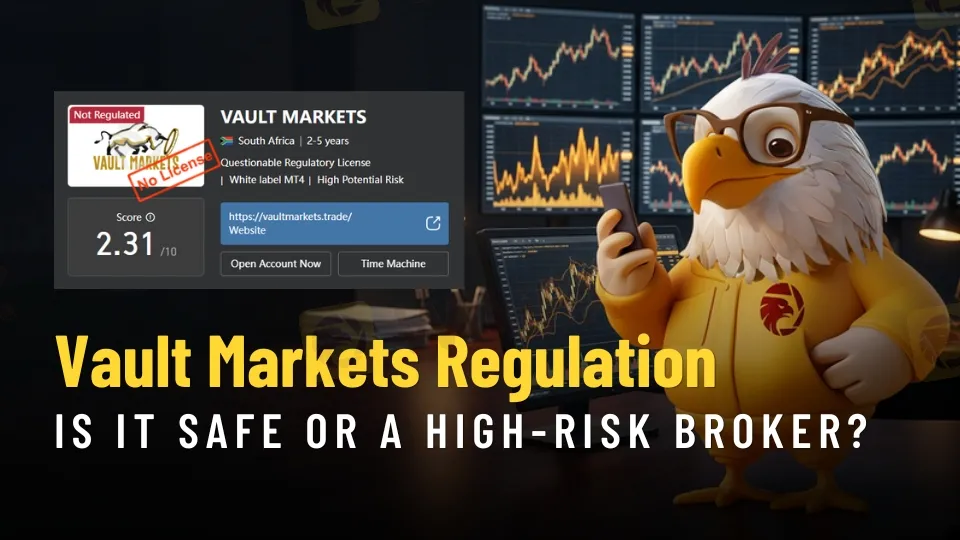
Is Vault Markets Legit and Safe? A Deep Analysis
When evaluating a financial partner, the first question remains: is the entity legally authorized to handle your capital? VaultMarkets (Pty) Ltd is a brokerage established in 2017 and headquartered in South Africa. While it has maintained an active presence in the market for several years, a closer look at its legal framework reveals significant concerns.
Current data indicates that the broker does not hold a valid, active forex trading license from a major financial authority. While many traders associate the firm with South African operations, a registration number (2021/596850/07) does not equate to active regulatory oversight. In the financial world, being a registered company is fundamentally different from being a regulated financial service provider. Without a license from an authority like the FSCA, the broker operates in a gray area, lacking the mandatory investor protections that safeguard retail traders from fraud or insolvency.
Regulation Vault Markets: What Does the Status Mean for You?
The primary concern regarding regulation Vault Markets is the lack of institutional accountability. Regulated brokers are required to maintain segregated accounts, ensuring that client funds are never mixed with company operational capital. They are also subject to regular audits and must meet strict capital adequacy requirements.
For an unregulated entity, these safeguards are not guaranteed. The broker currently utilizes white-label versions of popular trading software, which, without strict regulatory monitoring, increases the potential for execution manipulation or withdrawal hurdles. While the firm offers attractive trading conditions, the “No Regulation” status is a primary factor that traders must weigh against the promotional benefits offered.
Frequently Asked Questions:
- Is Vault Markets a regulated broker? No, it currently holds no active regulatory license from major financial authorities, operating as an unregulated entity in the market.
- Is it safe to trade with Vault Markets? Trading here involves high risk because the absence of regulation means there is no legal protection for your deposited capital.
- What is the minimum deposit for a new account? The entry requirement is very low, starting at $5 or R50, making it accessible for those testing the platform.
- Which trading platforms does the broker support? Traders can use the MetaTrader 4 and MetaTrader 5 platforms, specifically white-label versions provided for mobile and desktop devices.
- Does this broker offer a demo account? No, the broker does not currently provide a demo account, requiring traders to deposit real funds to access the markets.
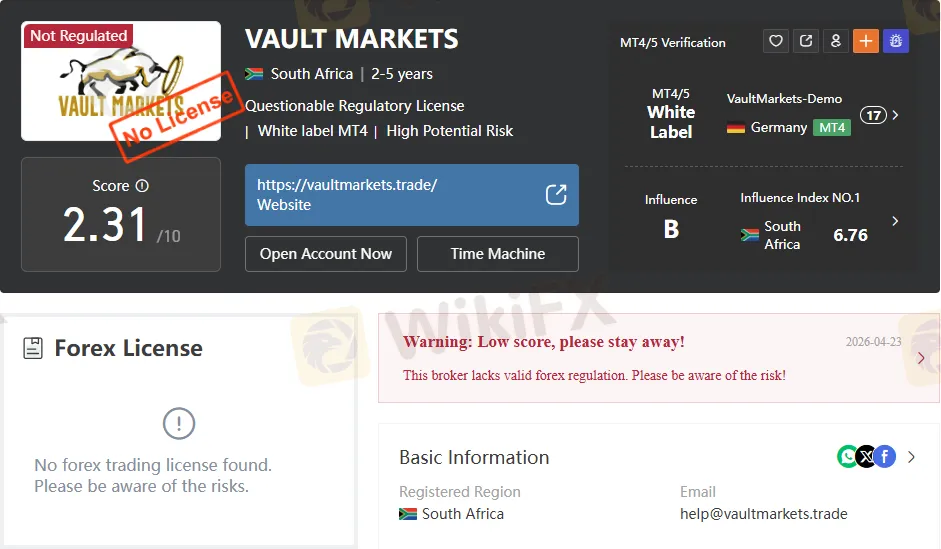
Comparing Account Features and Market Access
Despite the risks, the broker provides an extensive array of 11 account types designed to cater to different trading styles. From the “VAULT 100” to “VAULT ZERO,” the options vary significantly in terms of leverage and cost structure. Leverage is exceptionally high, reaching up to 1:1000 on certain accounts. While this allows for significant market exposure with minimal capital, it also increases the likelihood of a total account wipeout during volatile news events.
The tradable instruments are concentrated in four main categories: Forex, Stocks, Indices, and Energies. It is important to note that more diverse assets like Cryptocurrencies, Commodities, and ETFs are currently unavailable. This limitation suggests the broker is tailored primarily for high-leverage currency and index speculators rather than long-term diversified investors.
How the WikiFX App Enhances Trader Security
In an industry where transparency is often obscured, the WikiFX App serves as a critical verification tool. Before engaging with any broker, the app provides features that directly relate to identifying operational risks:
- Real-Time License Tracking: Instantly verify if a brokers license is active, “exceeded,” or fraudulent across global databases.
- User Exposure Board: Access a dedicated section where traders post evidence of withdrawal delays or suspicious account activity.
- On-Site Field Surveys: View photographic evidence and reports from physical inspections of broker offices to ensure they arent “ghost” companies.
- Platform Identification: Confirm whether a broker is using a genuine MetaTrader license or a potentially compromised counterfeit version.
- Global Ranking System: Compare the safety scores of thousands of brokers to find those with the highest regulatory compliance.
Conclusion
While the low deposit requirements and high leverage of this broker may seem appealing, the lack of regulation Vault Markets remains a significant hurdle for serious traders. The absence of a formal license means that your funds are not protected by the legal frameworks typically found in South Africa or international jurisdictions. Engaging with such a platform requires a high tolerance for risk and a thorough understanding that there is no regulatory recourse should the broker fail to fulfill its obligations. Always utilize third-party verification tools to monitor the status of your chosen provider.


Read more
Pepperstone Review 2026: Massive Deposit & Withdrawal Complaints Against This Regulated Broker
Have you experienced issues with Pepperstone deposit & withdrawal processing? From your experience, do you feel that the Australia-based forex broker causes losses to its clients? Did the brokerage entity freeze your account and give you a margin call? All these trading allegations have been rampant on broker review platforms such as WikiFX. This Pepperstone review article takes a close look at the user complaints, especially in 2026. Additionally, we have given an overview of the regulatory framework under which the brokerage entity operates.

Wundersys vs tradgrip: Two Offshore Newcomers Go Head to Head — and Neither Brings Home a Trophy
Some broker comparisons end with a confident "go with this one." This is not one of them — and that honesty is exactly what makes it worth reading. Wundersys and tradgrip are two young, offshore-registered brokers that keep popping up in front of beginner traders, often through aggressive online marketing. Both promise the usual buffet: tight spreads, generous leverage, multiple account tiers. And both, according to WikiFX, sit near the very bottom of the safety scale. So instead of crowning a champion, this comparison is really about something more useful: learning to read the warning signs, understanding the small differences that still matter, and knowing why "the better of two risky options" is still a conversation about risk.
The 6 Lowest-Commission Forex Brokers South Asian Traders Are Flocking To in 2026
If you trade forex from India, Pakistan, Bangladesh, Sri Lanka, or Nepal, you already know the quiet truth that eats into every trader's results: it is not just the market that decides whether you profit — it is the cost of getting in and out of each trade. Shave a couple of dollars off your commission on every lot, multiply it across hundreds of trades a year, and you are looking at the difference between a strategy that works and one that bleeds out slowly. South Asian traders are some of the most cost-conscious in the world, and rightly so. So we pulled the data on the brokers most often recommended for the region, cross-checked every name on WikiFX, and ranked them by the one number that matters most here: what they actually charge you to trade. Before the list, one quick lesson that will make this whole ranking click.

XPO Fund Wants $10,000 Before You Trade a Single Real Dollar — Read This Stunning Revelation
If you have spent even a week inside trading communities lately, you already know the pitch by heart. Pass a quick "challenge," get handed a funded account worth tens of thousands of dollars, and keep up to 80% of everything you make. No risking your own savings, no slow grind of building capital from scratch — just skill, a small fee, and a fast track to the big leagues. It is the exact dream every new trader is secretly chasing, and an entire industry has sprung up to sell it. XPO Fund is one of the louder voices selling that story right now. Its website is slick, its plans sound generous, and its marketing leans hard on words like "industry's lowest fee" and "fast payouts." But before you reach for your card, there is one number sitting quietly on this firm's profile — a number it would rather you scroll past — that every experienced trader would beg you to look at first. And no, it is not the profit split. Let's pull XPO Fund apart piece by piece: what it actually is, who is real
WikiFX Broker
Latest News
The Market's Ledger: Why Price Returns to Fill Liquidity Voids
 WikiFX
Keeping Your Forex Profits Safe With Trailing Stop Losses
WikiFXReview 2026: Japan FSA Regulation, Platform Access, and Complaint Signals
WikiFXHEADWAY Review: Broker Complaints Point to Withdrawals, Zeroed Balances, and Login Blocks
WikiFXIndian Stocks Take a Beating, Sensex Falls by Over 600 Points Today: Check Out Why
WikiFXDollar Hits Two-Month High Amid Surging Yields
WikiFXGetting Started in Forex: Understanding Currency Pairs, Central Banks, and Legal Risks
WikiFXIndia Left Reeling as Net FDI Crashes from $28 Billion to Just $1 Billion in Two Years
WikiFXAssetsFX Review 2026: Unregulated Status, Withdrawal Complaints, and Extreme Risk Signals
WikiFXNews Update: LTCG on Government Securities Slashed to Zero
WikiFXRate Calc

