From Hero to Zero: The Anatomy of a Trading Meltdown

Abstract:Protect your capital first. Protect your mental state second. Worry about profits third.
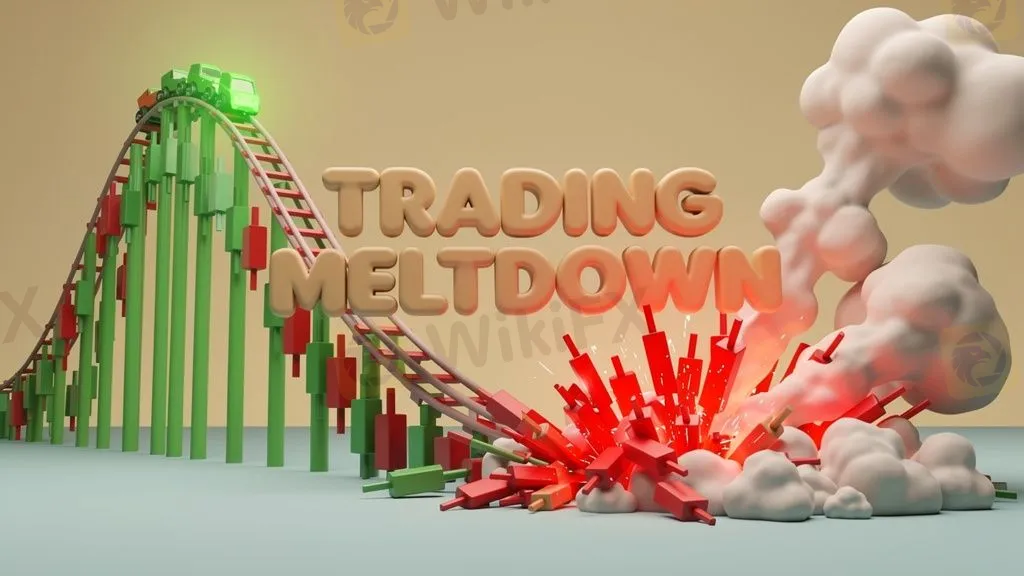
Lets be honest. We have all been there.
You wake up, grab your phone, and place a trade on the EUR/USD. Boom—quick profit. You barely analyzed the chart, but you just “felt” the market. You take another trade. Green again.
Suddenly, you feel invincible. You aren't just participating in the market; you feel like you are controlling it. You start calculating how soon you can quit your day job if you just keep compounding these wins.
This right here? This euphoria? This is exactly where the disaster starts.
Im rare to see a novice trader blow up their account because of a bad strategy. Most of the time, they blow up because their emotions hijacked the wheel, and they drove the car off a cliff.
Here is exactly how trading sentiment spins out of control, step by step—and how you can spot it before it destroys your portfolio.
Phase 1: The “God Mode” Illusion
It starts with a winning streak. Maybe it‘s luck, maybe it’s a trending market that lifts all boats. But your brain doesn't care about the “why.” It only sees the PnL (Profit and Loss) turning green.
During this phase, you stop looking at support and resistance levels. You stop checking economic calendars. You start trading larger lot sizes because, in your head, you “cannot lose.”
You are high on dopamine. And the market loves a confident fool.
Phase 2: The Denial (The First Cut)
Eventually, the market turns. You enter a trade with that same arrogance, but this time, the candle goes against you.
A disciplined trader takes the small loss and moves on. But the emotional trader? No way. Your ego is too inflated from the morning‘s wins. You tell yourself, “It’s just a noise spike. It will come back.”
You delete your Stop Loss.
Read that again. You delete your Stop Loss.
You justify it by saying you dont want to get “wicked out” before the reversal. But really, you are refusing to admit you were wrong. This is the moment logic leaves the room and hope takes over.
Phase 3: The Revenge Trade
The price drops further. You are now red on the day. All those profits from the morning are gone.
This is the snapping point. You aren't trading to follow a trend anymore; you are trading to get your money back. You feel like the market stole from you, and you are angry.
You enter a new position, but this time you double the lot size. You think, “I just need a few pips to break even, then Im done.”
This is called Revenge Trading. It is the fastest way to verify if your broker has a margin call mechanism (spoiler: they do).
Is your broker playing fair during the chaos?
When you are spiraling like this, you are vulnerable. You aren't checking spreads, and you certainly aren't checking if your broker is regulating the slippage fairly. Some shady brokers love volatility because they can widen spreads and hunt your stop losses (if you even have one left).
Before you deposit more money to “save” a bad trade, take a breath. Check who you are dealing with. A quick search on the WikiFX app can tell you if your broker is regulated or if they have a history of complaints about freezing platforms during high volatility. Don't let a scam broker finish off what your bad emotions started.
Phase 4: The Paralysis
You are now heavily over-leveraged. The trade is deep in the red. You are staring at your phone screen, physically sweating. You can‘t eat. You can’t focus on your actual job.
You are praying. “Please, just go back up to my entry price.”
You are completely paralyzed. You know you should cut the loss, but the loss is now so big that accepting it feels like admitting total defeat. So you hold. You hold all the way to the bottom.
How do you break the cycle?
If you are reading this and your heart rate is spiking because it sounds familiar, good. That means youre ready to fix it.
Emotional trading isn't cured by a better indicator. Its cured by strict rules.
- The “Walk Away” Rule: If you hit 3 losses in a row, close the app for 24 hours. The market will be there tomorrow. Your capital might not be if you stay.
- Hard Stops Only: Never enter a trade without a hard Stop Loss set in the system. If you catch yourself moving a stop loss further away, slap your own hand. That is a cardinal sin.
- Size Down: When you are on a losing streak, cut your position size in half. Most people do the opposite (Martingale) and double up. Don't be most people.
The Bottom Line
The market is a cold mechanism. It doesn't care about your rent money, your ego, or your “gut feeling.”
When you feel your face getting hot or your finger hovering over the “Buy” button just to make back a loss—stop. You are the drunk driver at the casino.
Protect your capital first. Protect your mental state second. Worry about profits third.
Stay safe out there.
Disclaimer: This article is for educational purposes only and does not constitute financial advice. Trading involves significant risk, and you can lose your entire investment. Always conduct your own research before trading.
Read more

Why You’re a Millionaire on Demo but Broke in Real Life
Stop me if you’ve heard this one before. You download a trading app, open a $10,000 demo account, and within two weeks, you’ve turned it into $50,000. You feel like the Wolf of Wall Street. You start calculating how soon you can quit your day job and buy that Lamborghini.
Stop Trading: Why "Busy" Traders Bleed Their Accounts Dry
Trading less isn't lazy. It’s the smartest move you can make.
Stop Chasing Green Arrows: Why High Win Rate Strategies Are Bankrupting You
Listen to me closely because what I’m about to tell you might hurt your feelings, but it will save your trading account.

Should You Delete Every Indicator from Your Charts? Let’s Talk Real Trading
Trading is about confluence—getting different clues to tell the same story.
WikiFX Broker
Latest News
Titan Capital Markets: The "Token" Trap Hiding Behind a Forex Mask
WikiFXShould You Delete Every Indicator from Your Charts? Let’s Talk Real Trading
WikiFXIs ZarVista Legit? A Critical Review of Its Licenses and Red Flags
WikiFXStop Chasing Green Arrows: Why High Win Rate Strategies Are Bankrupting You
WikiFXStop Trading: Why "Busy" Traders Bleed Their Accounts Dry
WikiFXScam Victims Repatriated: Malaysia Thanks Thailand’s Crucial Help
WikiFXWhy You’re a Millionaire on Demo but Broke in Real Life
WikiFXThe Copycat Trap: Why You Lose Money Using a "Winning" Strategy
WikiFXTradeview Markets Investigation: The "Negative Balance" Raid and Coercive Tactics Uncovered
WikiFX【Inside the Elite Committee】Talk with Mohamed Lewaa
WikiFXRate Calc

