Trans-Atlantic Rupture: Markets Brace for Trade War as Trump Issues Greenland Ultimatum

Abstract:The Trans-Atlantic alliance faces a critical test as President Trump threatens imminent tariffs on eight European nations over the Greenland dispute, prompting the EU to prepare a €93 billion retaliatory package.
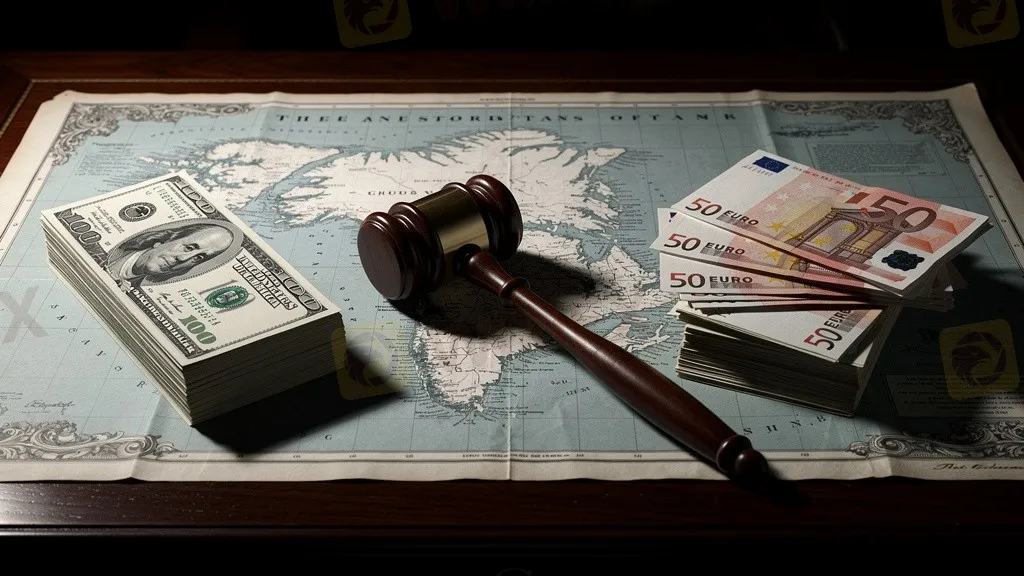
Global markets are repricing geopolitical risk after the US administration explicitly linked trade policy to territorial ambitions. President Trump has issued an ultimatum to eight NATO allies—including Germany, France, and the UK—threatening a 10% tariff on exports starting February 1, escalating to 25% by June, unless his bid to purchase Greenland is entertained.
- Key Rates: US Dollar Index (DXY) slipped to 99.15.
- Tariff Timeline: 10% effective February 1, rising to 25% by June.
- Retaliation Magnitude: EU preparing €93 billion ($108 billion) counter-offensive.
This unprecedented conflation of security and commerce has sent tremors through currency markets, weighing heavily on the US Dollar (DXY), which slipped to 99.15 as investors questioned the stability of traditional alliances.
EU Readies 'Nuclear' Option on Trade
Baptising the move as “economic coercion,” Brussels is preparing a swift counter-offensive. European leaders are finalizing a €93 billion ($108 billion) retaliatory tariff list targeting politically sensitive US industries, including Boeing aircraft and agricultural products. Furthermore, the EU is debating the activation of its “Anti-Coercion Instrument,” a powerful legal mechanism designed to weaponize trade policy against foreign bullying.
Analysts at Eurasia Group note that the linkage of trade tariffs to sovereign territory disputes marks a “dangerous downward spiral” for the NATO alliance. The Euro has found tentative support not from economic strength, but from the broad-based weakness of the Greenback as capital diversifies away from US political risk.
Strategic Implications for Forex
The immediate market reaction has been a flight to safety, though not towards the Dollar. The Swiss Franc (CHF) and Gold have outperformed. Strategists warn that if the February 1 tariffs take effect, EUR/USD could face significant volatility, caught between the economic drag of a trade war and the repricing of US institutional risk.
WikiFX Broker
Latest News
Upway (JRJR) Review: A Deep Dive into Safety and Regulation
WikiFXCoinbase Banks Push Advances Crypto Rules
WikiFXRM668K Gone Overnight: Factory Supervisor Trapped in Fake Investment Scam
WikiFXDollar Softens as Fed Signals Shifts; Warsh Leads Nomination Race
WikiFXSafe-Haven Supercycle: Gold Hits $4,690 as Silver Squeeze Intensifies
WikiFXTrans-Atlantic Rupture: Markets Brace for Trade War as Trump Issues Greenland Ultimatum
WikiFXChina Delivers 5% Growth Target, Yet December Data Reveals Deepening Consumption and Property Cracks
WikiFXItaly’s Consob Blocks Five Unauthorized Investment Websites in New Enforcement Action
WikiFXGold Tears Through $4,700 Barrier as Risk Premiums Spike
WikiFXInvestigation: The "Imposter" Trap Draining OANDA Traders
WikiFXRate Calc
