RM2.8 Billion Lost: Are Malaysians Fighting a Losing Battle Against Scams?

Abstract:According to Bank Negara Malaysia’s 2025 Annual Report, Malaysians lost a staggering RM2.8 billion to scams last year alone.
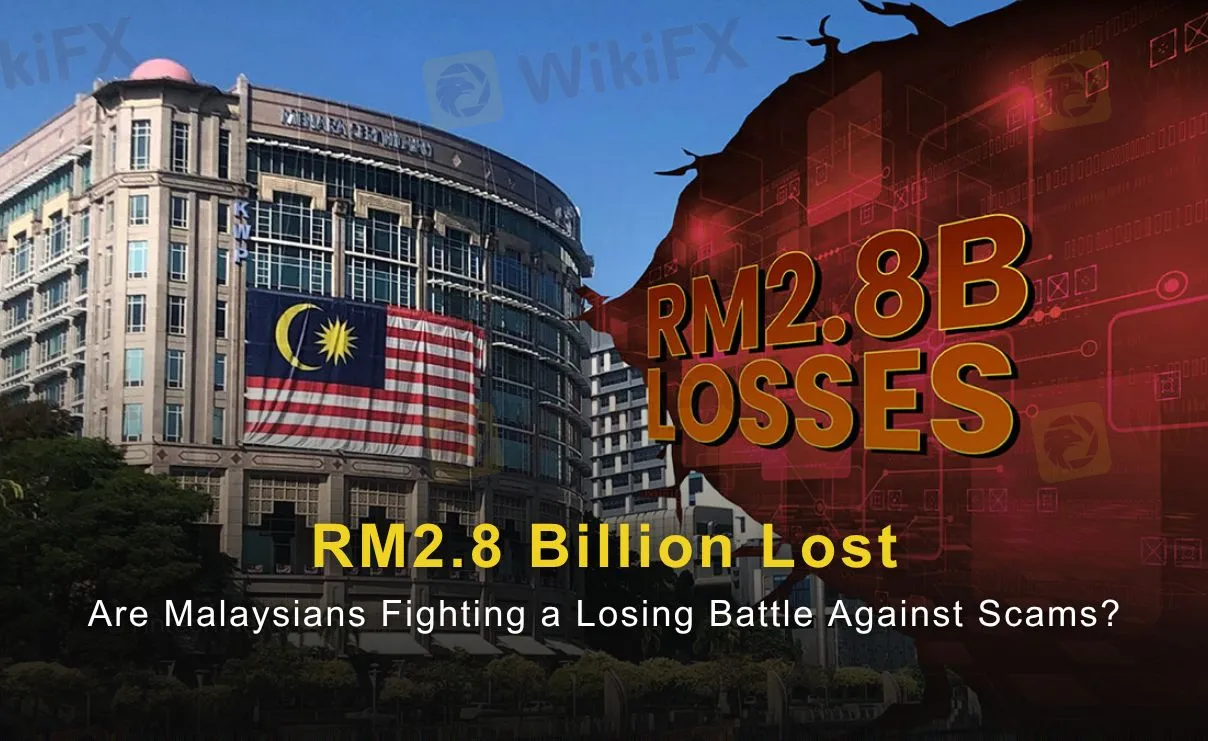
According to Bank Negara Malaysias 2025 Annual Report, Malaysians lost a staggering RM2.8 billion to scams last year alone. Beyond the figures, the report highlights the severe human cost, with retirees losing life savings and families seeing emergency funds disappear in a matter of days.
Recent cases illustrate how quickly such losses can occur. In Bentong, a 55-year-old assistant manager reportedly lost RM1.3 million after receiving a phone call from someone posing as a delivery company representative. The call escalated to a conversation with an individual claiming to be a police officer. Within days, the victim had transferred her entire Employees Provident Fund (EPF) savings and investment funds into accounts controlled by a scam syndicate. The case reflects a broader pattern in which victims are pressured into making rapid decisions under stress, often with devastating consequences.
Law enforcement data reinforces the scale of the issue. The Royal Malaysia Police (PDRM) recorded more than 67,000 online crime cases in just the first 11 months of 2025. Despite ongoing crackdowns, scam syndicates continue to operate with persistence, suggesting that enforcement efforts alone may not be sufficient to curb the problem.
Steps Towards Greater Accountability
In response, Bank Negara Malaysia has introduced several measures aimed at strengthening consumer protection. A key initiative is the Policy Document on Ensuring Fair Treatment for Victims of Unauthorised e-Banking Transactions (SEFT), launched in 2024. The framework promotes shared accountability between financial institutions and customers.
Early results indicate some progress. In 2025, the proportion of victims receiving full or partial compensation rose by approximately 26% compared to the previous year. Banks have also enhanced their internal systems, particularly in detecting malware threats, with some institutions reporting no malware-related incidents during the year.
The report notes that banks are increasingly taking responsibility when system weaknesses are identified. In such cases, financial institutions have absorbed customer losses entirely. At the same time, there has been greater transparency in how investigations are handled, with customers now informed of their rights from the outset. Most investigations are being completed within a 14-day timeframe, and in more complex cases, temporary financial assistance is being provided to affected individuals.
Operational Improvements and Industry Collaboration
Beyond compensation, several operational changes are being implemented to reduce fraud risks. One notable shift is the gradual move away from SMS-based one-time passwords (OTPs) towards more secure authentication methods. While SMS OTPs remain available as a fallback, customers are increasingly being given control over their security settings, including the ability to disable online payments or activate instant account-blocking features.
The National Fraud Portal, developed in collaboration with PayNet and industry players, has also shown measurable impact. It can trace stolen funds within 30 minutes and has improved the detection of mule accounts by 14%. According to PayNet, around one in five scam victims has been able to recover their funds through these efforts.
Additionally, the National Scam Response Centre (NSRC) now operates круглосуточно via its hotline (997). Since July 2025, it has been managed by the Commercial Crime Investigation Department of the Royal Malaysia Police, allowing for faster investigations and more direct enforcement action.
Falling Behind Regional Peers
Despite these efforts, Malaysia appears to be moving more cautiously compared to some regional counterparts. Countries such as Thailand and Singapore have introduced broader compensation frameworks that cover both authorised and unauthorised transactions. In contrast, Malaysias SEFT framework currently focuses primarily on unauthorised transactions.
This distinction is significant, as approximately 95% of online fraud cases in Malaysia involve authorised transactions where victims are manipulated into approving transfers themselves. Recognising this gap, Bank Negara Malaysia has indicated that it may expand the frameworks scope in the future, particularly to better protect vulnerable consumers.
Thailands approach also stands out for involving a wider range of stakeholders, including telecommunications companies, social media platforms, and digital asset operators. Such a multi-sector strategy reflects the increasingly complex nature of scam operations, which often span multiple channels and technologies.
The Human Cost and the Road Ahead
While policy improvements are evident, the broader challenge remains unresolved. Data from the Global Anti-Scam Alliance shows that 62% of Malaysian scam victims experience severe mental distress. This underscores that the impact extends far beyond financial loss, affecting emotional and psychological well-being.
At the same time, the largest losses continue to stem from sophisticated schemes. Non-existent investment scams accounted for RM1.37 billion in losses, followed by telecommunications scams at RM715.7 million. These figures highlight the scale and professionalism of the syndicates involved.
Bank Negara Malaysia has emphasised the importance of consumer awareness, noting that vigilance remains a critical line of defence. However, as scams grow more complex, the burden cannot rest solely on individuals.
Malaysia has made meaningful progress through regulatory reforms, improved systems, and stronger coordination among agencies. Yet the scale of losses and the limitations of existing frameworks raise a pressing question: whether current measures are sufficient to match the severity of the threat. Without broader accountability and faster adaptation, the gap between scammers and safeguards may continue to widen.

WikiFX Broker
Latest News
Fed Faces 'Twin Nightmare' as Energy Spikes and Labor Data Soften
WikiFXRM2.8 Billion Lost: Are Malaysians Fighting a Losing Battle Against Scams?
WikiFXConflict Within US Administration Over Iran Policy: NCTC Director Resigns
WikiFXMtxotu Review 2026: Is this Forex Broker Legit or a Scam?
WikiFXWhy Malaysian Crypto Investors Should Pay Attention to Quantum Computing
WikiFXMEGA FUSION Review: Regulation, Licences and WikiScore Analysis
WikiFXSuxxessFX Review: Scam or Legit Broker? Unbiased Analysis
WikiFXEvest Review 2026: Is This Broker Regulated or a Scam?
WikiFXIs CITY INDEX Legit or a Scam? Read This In-depth Review
WikiFXPrince Group Scandal Deepens: $4 Billion Laundering Network Exposed
WikiFXRate Calc
