China’s Renminbi Challenges Dollar Dominance | What It Means for Malaysia

Abstract:Several economists have argued that the renminbi has effectively become the world’s third largest payment currency.
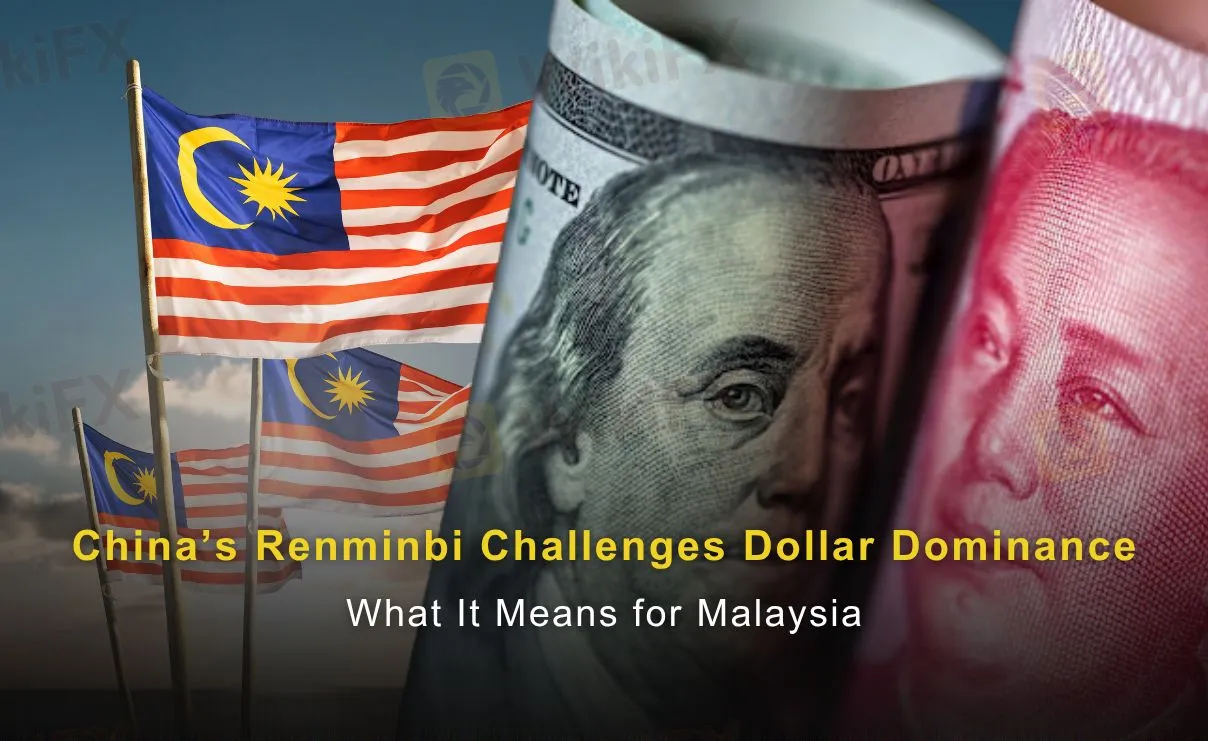
The global financial system may be undergoing a subtle but significant shift, as economists increasingly point to the growing role of China‘s currency in international payments. While official data appears to tell one story, deeper analysis suggests that the renminbi is already more influential than widely recognised, a development that carries important implications for Malaysia’s trade and financial landscape.
Several economists have argued that the renminbi has effectively become the worlds third largest payment currency. However, this position is not fully reflected in traditional global datasets, particularly those compiled by the SWIFT system, which remains heavily dominated by the United States dollar.
According to analysts, the discrepancy stems from structural changes in how cross border payments are conducted. A growing share of transactions involving the renminbi now takes place outside SWIFT‘s infrastructure. Instead, these payments are processed through China’s own systems and bilateral arrangements, which are not captured in conventional tracking mechanisms.
This shift has raised questions about whether SWIFT can still serve as a reliable benchmark for measuring global currency usage. Economists note that as alternative payment channels gain traction, the importance of SWIFT based rankings may gradually decline.
A senior economist from the Economist Intelligence Unit observed that the rise of parallel systems means that fluctuations in the renminbis share within SWIFT data may no longer provide a complete or accurate picture of its global standing. Transactions processed through other networks, particularly those linked to China, remain largely invisible in these statistics.
China has consistently maintained that the renminbi ranks as the third most used currency for global payments. This view was reinforced at the Lujiazui Forum, where the governor of the People‘s Bank of China highlighted the currency’s expanding international role. In contrast, SWIFT data for 2025 places the renminbi between fourth and sixth position, with a share of around 2.74 percent in global payments as of February.
The divergence highlights a broader issue in assessing a currencys international status. Payment share is only one measure. Other indicators include its role in global foreign exchange reserves, international debt markets, foreign exchange trading volumes, and its use in pricing and settling commodities.
From this perspective, the renminbi‘s influence may be growing more rapidly than headline figures suggest. Analysts from Standard Chartered note that cross border renminbi transactions are increasingly conducted through China’s Cross Border Interbank Payment System, known as CIPS, as well as through internal banking networks. These channels allow transactions to bypass traditional systems, making them harder to track using established metrics.
China has also signalled its intention to deepen financial integration with global markets. At the China Development Forum, policymakers outlined plans to expand cross border payment connectivity and continue opening the financial sector. This strategy reflects a broader push to internationalise the renminbi and reduce reliance on dollar based systems.
The expansion of CIPS is central to this effort. Former officials from the International Monetary Fund have advocated for further development of the system, emphasising the need for faster, cheaper and more efficient payment networks. Such improvements could strengthen the appeal of the renminbi in global trade and finance.
Recent data underscores the pace of growth. In 2024, CIPS processed transactions worth approximately 175 trillion renminbi, equivalent to more than RM10 trillion. This represents an increase of over 40 percent from the previous year, signalling strong adoption among financial institutions and corporates engaged in cross border trade.
For Malaysia, these developments are particularly relevant. As a trade dependent economy with deep links to China, shifts in global payment systems could influence how Malaysian businesses settle transactions, manage currency risk and access international markets. Greater use of the renminbi in trade settlement may reduce exposure to dollar volatility, but it also requires adjustments in financial infrastructure and risk management practices.
The broader geopolitical context adds another layer of urgency. Ongoing tensions between major economies and concerns over the potential use of financial systems as policy tools have prompted countries to explore alternatives. Chinas push to build its own payment ecosystem is widely seen as part of this trend.
At the same time, analysts caution that the renminbi‘s rise does not necessarily signal an immediate decline of the dollar’s dominance. Instead, the global system may be evolving towards a more fragmented structure, where multiple payment networks operate alongside each other.
For Malaysian investors and businesses, the key takeaway is clear. The mechanics of global finance are changing, often in ways that are not immediately visible in headline data. Understanding these shifts will be essential in navigating future trade flows, investment opportunities and currency risks.
WikiFX Broker
Latest News
China’s Renminbi Challenges Dollar Dominance | What It Means for Malaysia
WikiFXAXIORY Regulatory Status: A Complete Guide to Its Licenses and Company Details
WikiFXIs AXIORY Safe or Scam? A 2026 Deep Dive
WikiFXTradeview Markets Review: Regulation, WikiFX Score & Forex Trading Insights
WikiFXXS Broker Review 2026: Withdrawal Scams & Regulation Issues
WikiFX24markets Exposed: Cloned License, $45,500 User Losses, and Withdrawal Scams Signal Stark Warning
WikiFXZERO MARKETS Review: Scam Warning & $116K Withdrawal Blocked
WikiFXFOREX.com Analysis Report
WikiFXBinany Review: Examining Reported Withdrawal Denials & Deposit Failure Complaints
WikiFXMr Pips Forex Scam Exposed as Losses Hit RM240 Million
WikiFXRate Calc
